
Building confidence in a changing digital landscape
Technology in education continues to move quickly, and for schools, keeping pace can be challenging.
New tools create exciting opportunities for teaching, learning and productivity, but successful adoption depends on more than simply making technology available. Staff need time to understand how it works, explore where it can add value and develop the confidence to use it in ways that feel practical and relevant to their role.
The Stoke Poges School wanted to help its staff build that confidence around Microsoft Copilot and using AI in education.
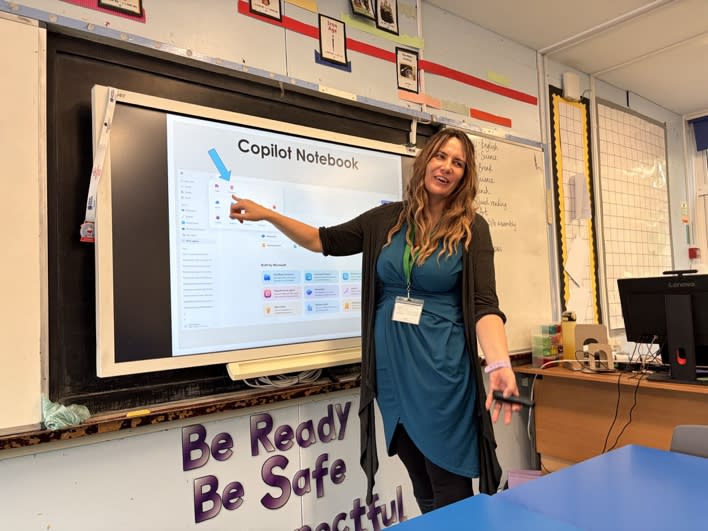
Working with TLG TurnITon, the school completed a five-week Copilot for Education development programme led by our Training & Transformation Lead, Stef Chapman. The programme combined practical training, discussion and hands-on exploration. All designed by our education specialists to help staff understand how AI can support day-to-day work and how they can use AI with greater confidence.
The challenge: keeping pace with technology
Like many schools, The Stoke Poges School recognised the opportunities that emerging technologies could offer, while also acknowledging the challenge of keeping up with the pace of change.
AI had quickly become part of the wider conversation across education, but staff were at different stages in their understanding and confidence. For some, the possibilities were exciting. For others, the challenge was knowing where to start and how tools such as Copilot could realistically support their work.
The school wanted development that was useful to the whole staff team rather than training focused solely on the technology itself.
That meant creating opportunities for colleagues to ask questions, try tools for themselves and understand how AI could support areas such as planning, administration, communication, resource creation and everyday productivity.
Most importantly, the school wanted staff to feel equipped to engage with new technology rather than feeling that they were constantly trying to catch up with it.
The programme: five weeks of practical learning and development
TLG TurnITon worked with The Stoke Poges School to deliver a five-week Copilot for Education programme designed around practical adoption.
Led by TLG TurnITon’s Training & Transformation Lead, Stef Chapman, the programme gave staff the opportunity to build their understanding over time rather than trying to absorb everything in a single training session.
Across the five weeks, the focus moved from understanding the technology to exploring how it could support real tasks and new ways of working across the school.
The programme included:
- An introduction to Copilot and the role of AI in education
- Practical demonstrations grounded in everyday school activity
- Opportunities for staff to explore Copilot themselves
- Guidance on prompting and getting more useful outputs
- Examples relevant to teaching, learning and productivity
- Space for staff to ask questions and discuss opportunities
- Ongoing support as confidence and understanding developed
The programme was designed to feel accessible regardless of an individual’s starting point.
Rather than approaching AI as another piece of technology staff were expected to learn independently, the sessions created space for experimentation and discussion. This helped colleagues understand where Copilot could genuinely save time or support their work, while also giving them the confidence to make informed decisions about when and how to use it.
The outcome: from awareness to confident adoption
By the end of the five-week programme, staff had moved beyond simply knowing what Copilot was and developed a clearer understanding of how it could support their roles.
The school saw increased confidence across the team, with staff better equipped to explore AI as part of their everyday work and identify practical ways it could support teaching, learning and productivity.
For Headteacher Liz Astley, one of the most valuable aspects of the programme was having dedicated expertise available over several weeks.
With technology changing so quickly, having structured guidance gave staff the opportunity to learn at a manageable pace and build their confidence as the programme developed.
Key outcomes:
- Greater staff confidence when using Copilot and engaging with AI
- Improved understanding of practical applications across school roles
- More confidence experimenting with new ways of working
- Development that was relevant and accessible to the wider staff team
- Increased awareness of how AI can support productivity and teaching
- A stronger foundation for continued digital development across the school
The programme also helped create a more positive starting point for future technology adoption. Staff had the opportunity to learn together, share experiences and become more comfortable with trying new tools in a supported environment.
Supporting people through digital change
The Stoke Poges School’s Copilot programme demonstrates that digital transformation is as much about people as it is technology.
Introducing new tools can be relatively straightforward. Helping people understand them, trust them and use them effectively takes time, support and training that reflects the realities of working in a school.
Through five weeks of practical development, The Stoke Poges School gave its staff the opportunity to explore AI with expert guidance and build the confidence to apply what they had learned.
For TLG TurnITon, that is an important part of effective digital transformation: helping schools turn technology into something their people can understand, adopt and use with purpose.
As AI and other technologies continue to develop, schools do not need to have every answer immediately. What matters is creating the right environment for staff to keep learning, experimenting and building confidence as technology evolves.